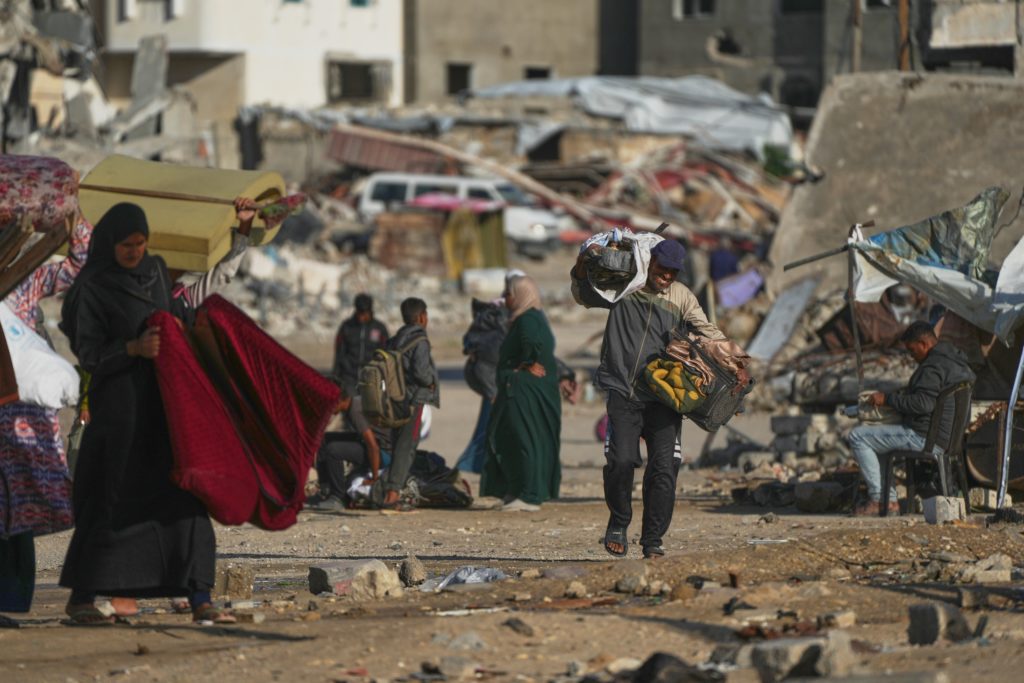
In a decisive move that could reshape the future of Gaza, the United Nations Security Council on Monday approved a US-led plan authorizing an international stabilisation force to secure the war-torn territory. The resolution also — cautiously but unmistakably — outlines a potential path toward a future independent Palestinian state, marking one of the most significant diplomatic shifts in years.
The vote passed 13–0, with Russia and China abstaining after Moscow’s competing resolution failed to gain traction. While the US and its allies had been bracing for a possible Russian veto, the abstention cleared the way for what many diplomats called a “make-or-break moment” for Gaza’s fragile ceasefire.
This milestone comes after almost two years of devastating conflict between Israel and Hamas — a war sparked by the October 7, 2023 attack that killed about 1,200 Israelis, followed by an Israeli offensive that has since taken the lives of over 69,000 Palestinians, according to Gaza health officials.
A Critical Step for Ceasefire and the Road Ahead
Several Arab and Muslim-majority nations previously signaled that they would only commit troops for an international mission if it carried official Security Council authorization. Their participation is seen as essential for stabilizing Gaza and preventing a return to violence.
The newly approved US resolution endorses President Donald Trump’s 20-point ceasefire plan, establishing a transitional “Board of Peace,” to be chaired by Trump, and authorizing the stabilisation force through the end of 2027.
The mission will be tasked with securing borders, overseeing demilitarization, and coordinating humanitarian relief — a monumental undertaking in a region still reeling from destruction.
Strengthened Commitment to Palestinian Statehood
During intense negotiations, Arab nations and Palestinian representatives pushed the US to strengthen the language on Palestinian self-determination.
As a result, the final resolution acknowledges that once the Palestinian Authority reforms and Gaza reconstruction advances, “conditions may finally be in place for a credible pathway to Palestinian self-determination and statehood.”
The resolution also commits the US to establishing a new dialogue between Israel and the Palestinians to seek a shared political horizon.
This language, however, triggered outrage from Israeli Prime Minister Benjamin Netanyahu, who vowed to oppose any attempt to establish a Palestinian state, arguing it would eventually empower Hamas.
Arab and Muslim Nations Pushed the Deal Forward
A key factor in the resolution’s passage was a rare unified front from nations including Qatar, Egypt, UAE, Saudi Arabia, Indonesia, Pakistan, Jordan, and Turkey, all calling for swift adoption and expressing readiness to support the mission.
Russia’s Rival Plan Falls Short
Russia attempted to advance its own resolution calling for stronger guarantees for Palestinian statehood and a unified Gaza-West Bank territory under the Palestinian Authority. It also removed references to the US-proposed transitional board. But the proposal failed to gain the necessary support.
What the Stabilisation Force Will Do
The approved plan empowers the force to:
-
Support Gaza’s demilitarization
-
Oversee the decommissioning of weapons from non-state groups
-
Secure border zones alongside a vetted Palestinian police force
-
Facilitate humanitarian aid routes
-
Coordinate closely with Egypt and Israel
As stability grows, Israeli forces are expected to withdraw gradually, with timelines tied to security benchmarks set by the international mission, Israel, the US, and ceasefire guarantors.