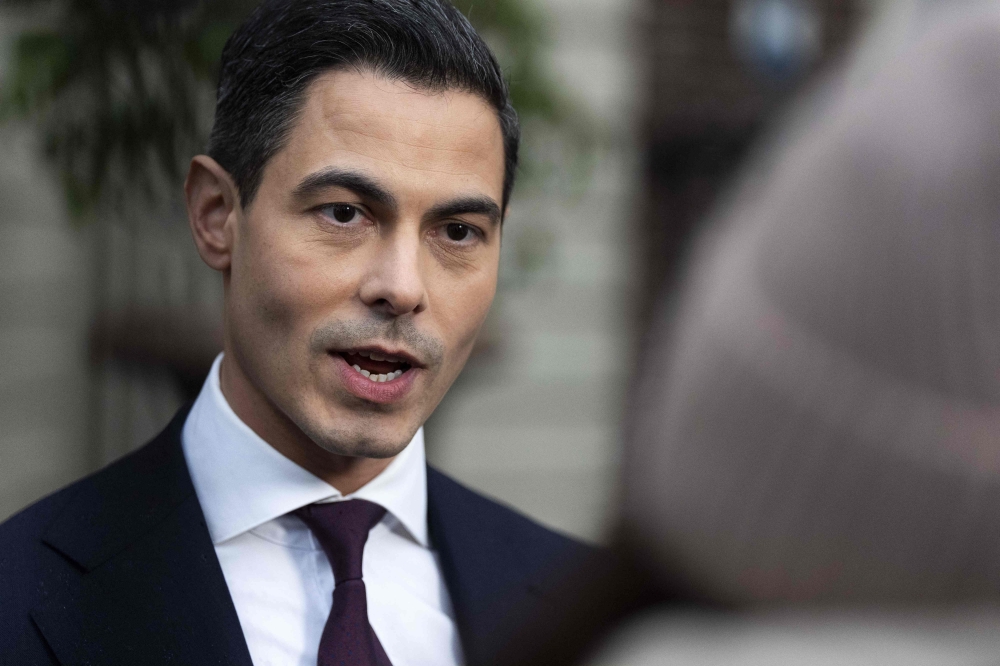
The Netherlands steps into a defining political moment today as 38-year-old Rob Jetten is officially sworn in as the country’s youngest-ever prime minister — and the first openly gay leader in its history.
In The Hague, the atmosphere is charged with anticipation. Jetten’s rise to the top was anything but predictable. Just months ago, many believed the far-right Freedom Party (PVV), led by Geert Wilders, would maintain its grip on power. Instead, Jetten staged a dramatic comeback, narrowly defeating the PVV in October’s election.
The snap election had been triggered after the PVV pulled out of the previous coalition government — one of the most right-leaning administrations the Netherlands had seen in recent decades — which collapsed after only 11 months in office.
Jetten’s party, D66, has now joined forces with the centre-right CDA and the liberal VVD to form a new coalition government. Together, they hold 66 seats — nine short of a parliamentary majority. While the numbers may be tight, the speed of negotiations tells a different story. It took just 117 days to finalize the coalition, far quicker than the 223 days required to form the previous government.
During his campaign, Jetten focused on optimism rather than outrage. He argued that populism could be defeated through a positive, forward-looking vision for the country. One of his key messages was to reposition the Netherlands firmly at the heart of Europe, stressing that cooperation within the European Union is essential for the country’s future.
The coalition’s manifesto outlines strong support for Ukraine and a commitment to meeting NATO defence spending targets. At the same time, it signals fiscal discipline — favouring budget cuts over deficit spending to fund investments.
Political analysts describe the new government as less extreme than its predecessor, but still carrying a clear right-leaning tone. Plans include stricter migration policies, tougher family reunification rules, and reductions in certain social benefits, including unemployment support, to finance increased defence spending.
However, governing may not be smooth. Without a parliamentary majority, Jetten’s coalition will need backing from opposition parties to pass major legislation. That could slow down large reforms and require more compromise than campaign rhetoric suggested.
Geert Wilders’ political influence, once dominant, has diminished. His PVV party dropped from 37 seats in 2023 to 26 seats in the latest election. Although still the second-largest party, coalition partners had firmly ruled out working with him, effectively sidelining the far-right leader.
Meanwhile, other right-wing movements continue to gain ground. The Forum for Democracy secured additional seats with a strong anti-EU and anti-immigration message, and the hard-right JA21 saw significant gains, though it ultimately failed to secure a cabinet role.
Today, Jetten and his cabinet will take the oath before King Willem-Alexander at Huis Ten Bosch Palace in The Hague. The ceremony is not just a constitutional formality — it represents a generational and cultural shift in Dutch leadership.
Beyond party politics, this moment resonates on a deeper level. A 38-year-old openly gay leader stepping into the highest office sends a powerful message about representation, inclusion, and changing societal norms. For many citizens — particularly younger generations and the LGBTQ+ community — this is more than a political transition; it is a symbol of possibility.
As the Netherlands embarks on this new chapter, the real test begins now. Coalition compromises, economic pressures, migration debates, and Europe’s evolving political landscape will shape Jetten’s leadership.
History has been made. What happens next will define it.