
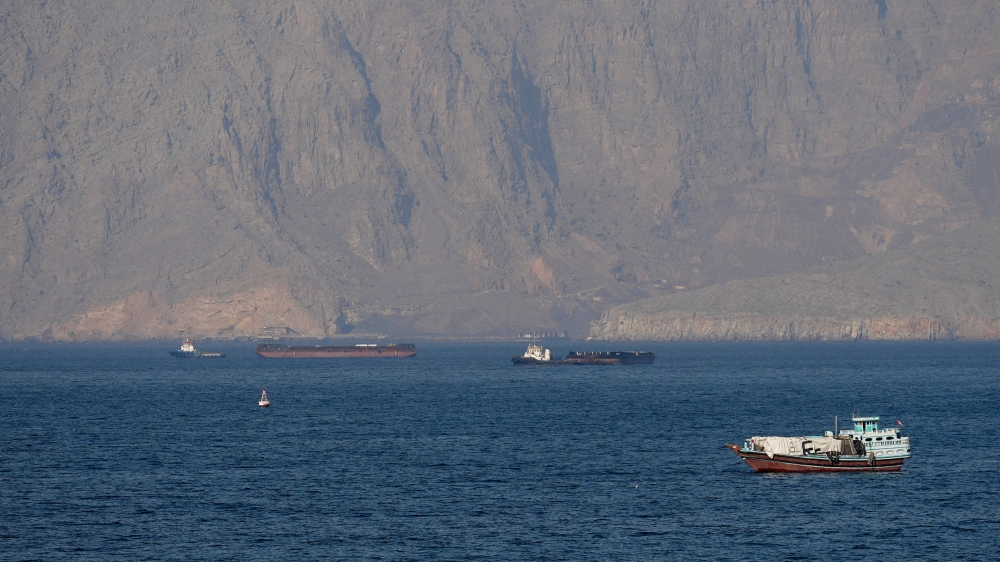
Tensions in the Middle East have escalated sharply as Iran issued a strong warning to the United States, urging it to stay out of the strategically critical Strait of Hormuz. The warning comes after Donald Trump announced plans for a U.S. operation aimed at helping commercial ships stranded in the region due to the ongoing conflict involving the U.S., Israel, and Iran.
Trump revealed that the United States is preparing to assist vessels that have been effectively trapped in the Gulf for more than two months. Many of these ships are reportedly running low on essential supplies, including food, as the situation continues to worsen. In a statement shared on his Truth Social platform, Trump said the U.S. intends to guide ships safely through restricted waterways so they can resume normal operations.
Iran’s military leadership responded swiftly and firmly. The unified command of Iran’s armed forces warned that any foreign military presence—particularly U.S. forces—entering the Strait would face severe consequences. Officials emphasized that Iran considers the security of the waterway to be under its full control and insisted that all vessel movement must be coordinated with its military authorities.
Ali Abdollahi, a senior Iranian commander, reiterated that any attempt by foreign forces to enter the area without permission would be treated as a direct threat. The message was clear: Iran is prepared to respond aggressively if its authority over the region is challenged.
Meanwhile, the U.S. military, under United States Central Command, confirmed it is ready to support the mission with a large-scale deployment. This includes approximately 15,000 personnel, over 100 aircraft, naval warships, and drones. Admiral Brad Cooper stated that the operation is crucial not only for regional stability but also for protecting the global economy, which heavily depends on the uninterrupted flow of oil through the Strait.
The situation on the ground—or rather, at sea—remains tense. According to the International Maritime Organization, hundreds of ships and tens of thousands of seafarers are currently unable to pass through the Strait. Reports have also emerged of vessels being targeted, including a recent incident where a tanker was struck by unidentified projectiles near the United Arab Emirates. Fortunately, no casualties were reported.
Iran has significantly restricted shipping activity in the Gulf, allowing only its own vessels to pass freely. This has sent global energy markets into turmoil, pushing oil prices above $100 per barrel at one point. In response, the U.S. has also enforced its own blockade targeting Iranian-linked shipping, further complicating the crisis.
Diplomatic efforts are ongoing but remain uncertain. Iran has reportedly submitted a 14-point peace proposal, which includes demands such as lifting sanctions, releasing frozen assets, and ending military operations across multiple fronts. The proposal also suggests postponing nuclear negotiations until after the conflict ends.
However, this stance appears to conflict with Washington’s position. The U.S. continues to insist that Iran must first agree to strict limitations on its nuclear program, including reducing its stockpile of highly enriched uranium. Iran maintains that its nuclear ambitions are peaceful but has expressed willingness to negotiate under the right conditions.
While Trump has indicated that discussions are progressing, no concrete breakthrough has been confirmed. The stakes remain high—not just for the nations directly involved, but for the entire global economy, as nearly 20% of the world’s oil supply depends on the safe passage through the Strait of Hormuz.