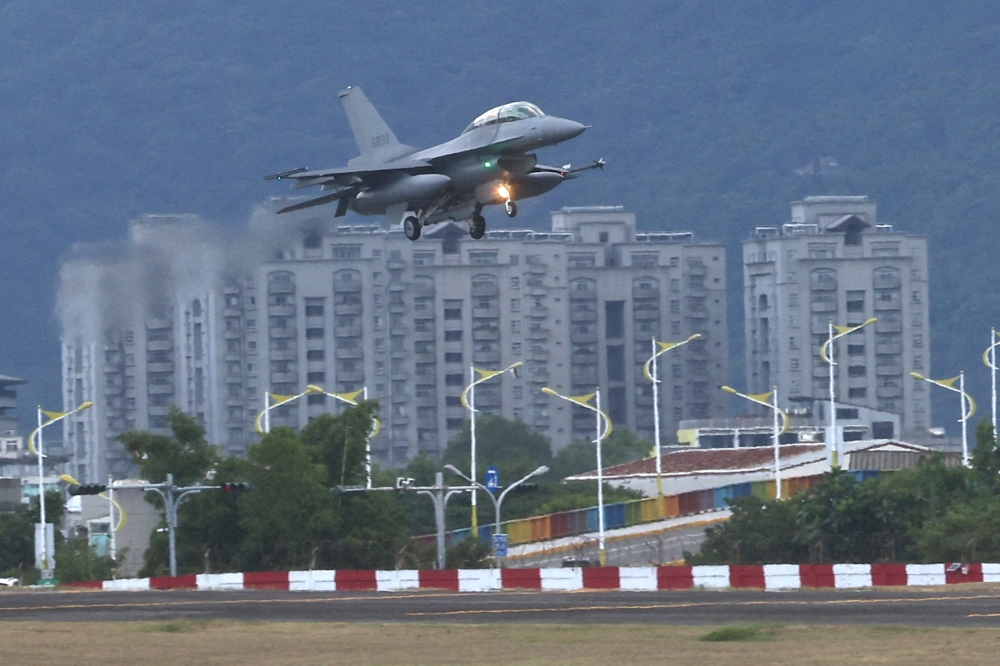
Taiwan is raising alarms that China could exploit the United States’ distraction with the ongoing Middle East conflict. State media in Beijing have used examples from the war to question the effectiveness of US weaponry that Taiwan would rely on if faced with a Chinese invasion.
As one of the world’s most sensitive flashpoints, Taiwan faces increasing military pressure from China, which considers the island part of its territory. In December, Beijing conducted major war games around Taiwan, signaling its continued interest in asserting control.
Taiwanese officials point to renewed large-scale Chinese air incursions since March 14–15, after a brief lull, as evidence that Beijing is watching for opportunities while US forces are redirected to the Middle East.
“This is a moment for China to exercise influence,” said a senior Taiwanese security official, speaking anonymously due to the sensitivity of intelligence matters. “When US forces shift away and Indo-Pacific strength is diverted, tension and instability could be manufactured.”
Neither China’s Taiwan Affairs Office nor its defense ministry responded to requests for comment. Taiwan’s Defence Minister Wellington Koo has emphasized that China’s desire to annex Taiwan by force has “always existed.”
US Military Balance and Regional Security
Officials in Taiwan acknowledge that the US has long maintained balanced deployments across regions, making a Chinese attack unlikely. A State Department spokesperson in Washington echoed this, stating that the US remains “formidable” in addressing simultaneous global threats and committed to maintaining stability across the Taiwan Strait.
However, experts warn that a prolonged conflict in the Middle East could strain US resources and domestic attention. Chang Kuo-cheng, a professor of international relations at Taipei Medical University, said: “The longer the war lasts, the more China can assess US response strategies, potentially emboldening Xi Jinping to increase pressure on Taiwan.”
Cognitive Warfare and Propaganda Concerns
Taiwan is wary of Beijing leveraging the Middle East conflict in propaganda efforts. Reports suggest that AI-generated videos may spread disinformation, such as predicting energy crises in Taiwan should it face a future blockade. Chinese state media have promoted the idea that reunification brings infrastructure benefits, including a Beijing-Taipei expressway, and promised energy security if Taiwan submits to Beijing—claims Taiwan dismisses as psychological tactics.
Chinese analysts have highlighted potential weaknesses in US-supplied defense systems, citing incidents like the Gerald R. Ford aircraft carrier fire, while the US has not confirmed any direct link to Iranian attacks. Todd Harrison, a defense analyst at the American Enterprise Institute, noted that the conflict provides China with opportunities to observe US military operations and gather intelligence on high-end assets like the F-35 fighter jet.
Taiwan’s Response
Taiwan continues to invest in defense, proposing an additional US$40 billion in spending. Officials are also closely watching the postponed US-China summit in Beijing, expected to address Taiwan-related issues, though Taiwan has limited influence over the agenda. Deputy Minister Shen Yu-chung stressed: “We must present a clear and consistent message to the outside world that we are determined to rely on our own national defense to safeguard our sovereignty.”
At its core, Taiwan’s concerns highlight a broader human story: a small democratic island striving to maintain its independence while navigating the complex realities of global geopolitics, caught between two superpowers. The tension is not just military; it reflects the resilience and vigilance of a people determined to protect their way of life.