
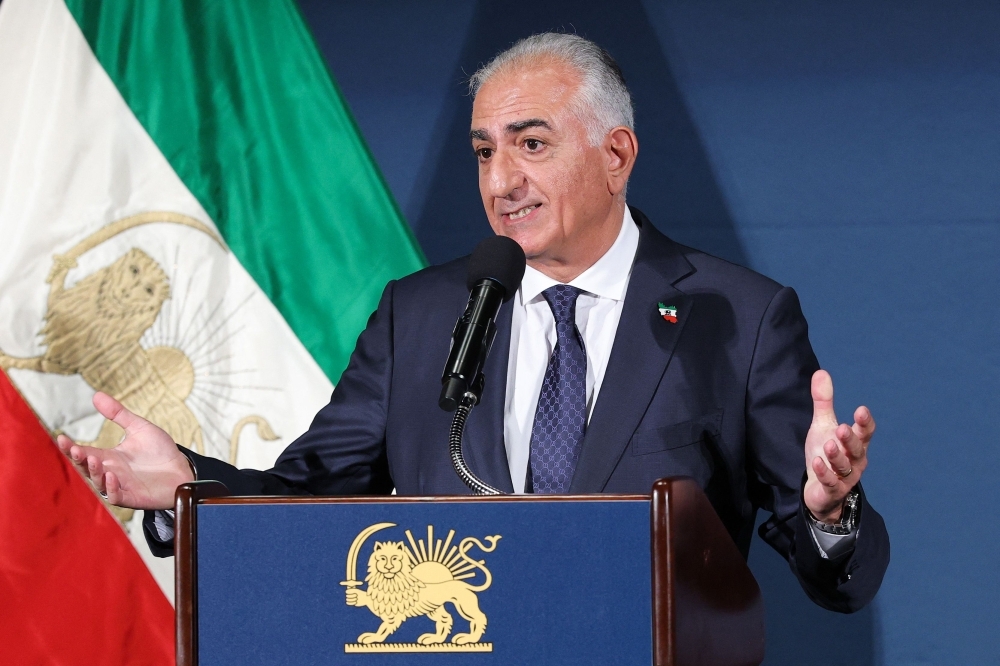
Reza Pahlavi, the exiled son of Iran’s last shah, said on Friday that the Islamic Republic is living on borrowed time, expressing confidence that nationwide protests will ultimately bring the government down. Speaking from his home in the Washington area, Pahlavi positioned himself as a leading voice of the opposition while urging the international community to stand firmly with ordinary Iranians.
At a press conference in Washington, he declared, “The Islamic Republic will fall — not if, but when,” framing the moment as a historic turning point rather than a distant dream.
The current wave of unrest began in late 2025, sparked largely by crushing economic conditions, unemployment, inflation, and widespread frustration with political repression. Since then, Pahlavi has repeatedly appealed to the United States and other world powers for stronger support, arguing that Iranian citizens should not be left to face state violence alone.
Former U.S. President Donald Trump had previously warned Iran that deadly crackdowns could trigger American intervention and even encouraged protesters by saying “help is on the way.” However, no direct action followed. Human rights groups estimate that thousands of demonstrators have been killed during the unrest, though exact figures remain disputed.
In recent days, Trump suggested that Tehran had paused executions of protesters, thanking Iranian authorities publicly — a statement that drew mixed reactions from activists and exiles alike.
Pahlavi urged Trump not to repeat what he described as past diplomatic mistakes with Tehran, expressing faith that the former president would “stand with the Iranian people” if he chooses to act.
Going further, Pahlavi called for targeted pressure against Iran’s Revolutionary Guards, describing them as the core of domestic repression and regional militancy. He also asked governments worldwide to expel Iranian diplomats and help restore internet access inside Iran, which has been heavily restricted during protests.
Despite his supporters chanting his name in streets and plazas, Pahlavi faces criticism from some Iranian opposition groups who fear he seeks to restore the monarchy. He insists instead that he wants to guide a transition toward a secular democracy chosen through a national referendum.
“I will return to Iran,” he said firmly, promising that a future government would build better relations with the United States and Israel and reintegrate Iran into the global economy.
He even proposed what he called a “Cyrus Accord” with Israel, invoking ancient Persian history as a symbol of tolerance and reconciliation.
Reflecting on Iran’s missed potential, Pahlavi concluded, “Iran could have been the South Korea of the Middle East — instead, we are treated like North Korea.”