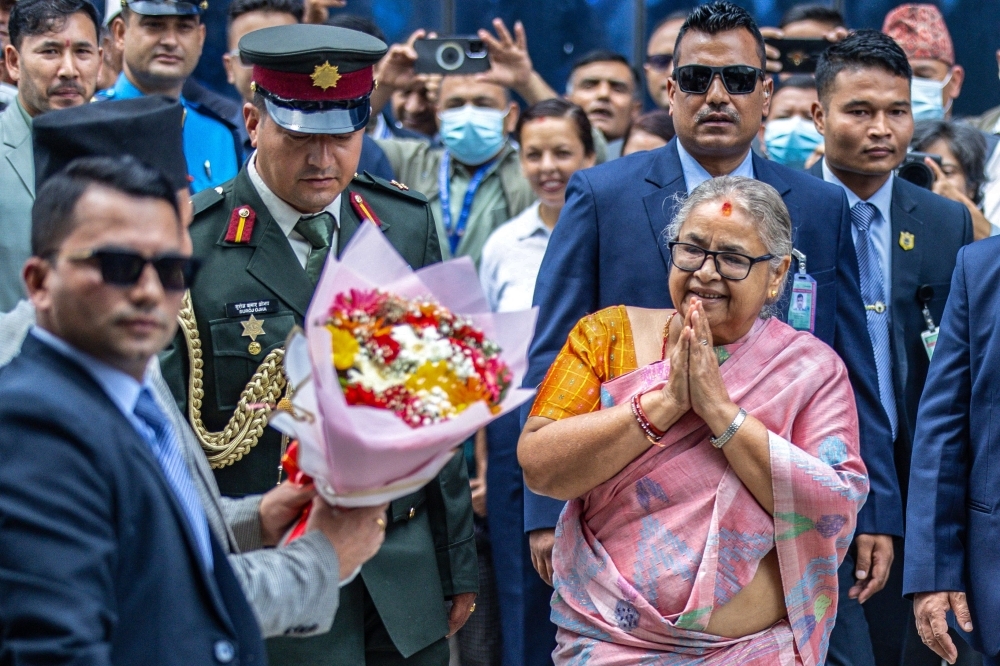
Nepal ushered in a new chapter today as a freshly formed interim government was sworn in under the leadership of Prime Minister Sushila Karki, a former chief justice known for her integrity and independence. The transition comes on the heels of the most violent and widespread unrest the nation has witnessed in decades.
The solemn oath-taking ceremony took place under a makeshift awning in front of the fire-damaged presidential office, a symbol of the nation’s ongoing turmoil. President Ram Chandra Paudel officiated the event, swearing in three key ministers in a ceremony broadcast live to a country desperate for healing and reform.
The unrest, which began on September 8, was ignited by a controversial social media ban and quickly escalated into a broader youth-led anti-corruption movement. Government buildings and even parliament were set on fire in what many are calling a tipping point for a frustrated generation.
In just two days, 72 people were killed, and 191 remain hospitalized, according to government data. It’s the worst violence since the end of Nepal’s bloody civil war and the 2008 abolition of the monarchy.
Now, all eyes are on Prime Minister Karki and her newly appointed ministers—chosen not for political allegiance, but for their track records.
-
Om Prakash Aryal, a fearless legal advocate known for fighting corruption and defending human rights, now holds the powerful Home Ministry alongside Law, Justice, and Parliamentary Affairs.
-
Kulman Ghising, the man who famously ended Nepal’s long-standing power outages, will now oversee Energy, Infrastructure, Transport, and Urban Development—crucial sectors for rebuilding both infrastructure and public trust.
-
Rameshwor Khanal, a seasoned economist and former finance secretary, takes on the Finance Ministry, facing the tough task of reviving an economy where one in five youths aged 15–24 are unemployed, according to the World Bank.
Nepal’s GDP per capita is just USD 1,447, a number that reflects deep-rooted economic struggles which have only worsened over time. For many young protesters, the recent riots weren’t just about social media or politics—they were a desperate cry for a future that feels increasingly out of reach.
This moment is more than political transition—it’s a call to reimagine Nepal.
The youth who lit the fires didn’t do it to destroy; they did it to be heard. And now that the fires are out, the question remains: Will those in power listen? Will they finally deliver on promises that have been postponed for far too long?
If this government wants to be remembered, not just as interim—but transformative—it must prioritize transparency, economic opportunity, and above all, inclusion. The road ahead is long, but perhaps, for the first time in years, Nepal has a chance to rebuild from the ashes—with purpose.