
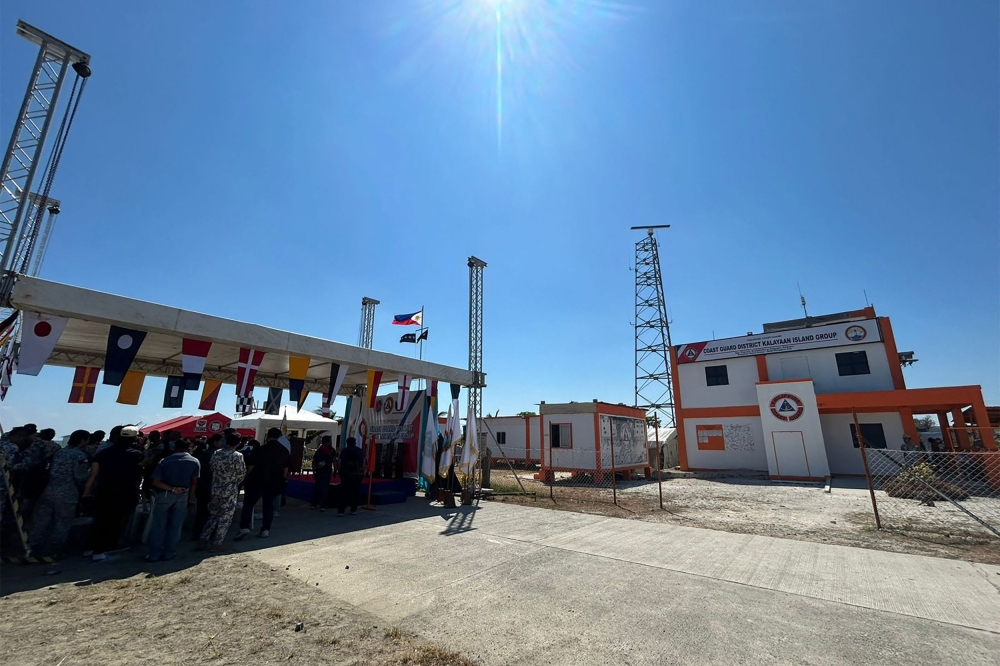
In a significant move amid rising tensions in the South China Sea, the Philippines has officially established a new coast guard command centre on Pagasa Island, marking its first dedicated operational hub within the contested Spratly Islands.
Previously managed from Palawan, the newly formed district will now directly oversee a vast maritime area spanning approximately 68,000 square kilometres. This strategic shift is aimed at strengthening on-ground coordination and rapid response capabilities in a region frequently marked by territorial disputes.
During a visit to the island, an AFP journalist observed multiple vessels from the China Coast Guard actively patrolling nearby waters. These ships reportedly issued radio warnings to the aircraft carrying the journalist—an indication of the heightened sensitivities in the area.
The China continues to assert sweeping claims over nearly the entire South China Sea, despite an international tribunal ruling that found no legal basis for such claims.
Speaking at the inauguration ceremony, Philippine Coast Guard Commandant Ronnie Gil Gavan emphasized that the new command will elevate both operational readiness and morale among personnel. The facility will be led by a commodore-level officer and supported by a permanently deployed vessel, additional response units, and specialized teams.
The development also includes plans to deepen the island’s port, enabling larger coast guard ships to dock directly. Currently, personnel transfers rely on smaller boats due to shallow waters.
Meanwhile, nearby islands such as Kota Island and Parola Island are set to receive upgrades, transitioning their substations into full operational stations. This expansion reflects a broader effort to solidify the Philippines’ presence across the region.
Beyond military and strategic enhancements, the initiative is expected to benefit the approximately 400 residents of Pagasa Island—mostly fishermen and their families. Increased funding will support improved access to healthcare, education, and essential services.
This move follows the Philippines’ recent plan to rename over 100 geographical features in the Spratly Islands, reinforcing its sovereignty claims. In response, China has criticized the action, warning of potential countermeasures.