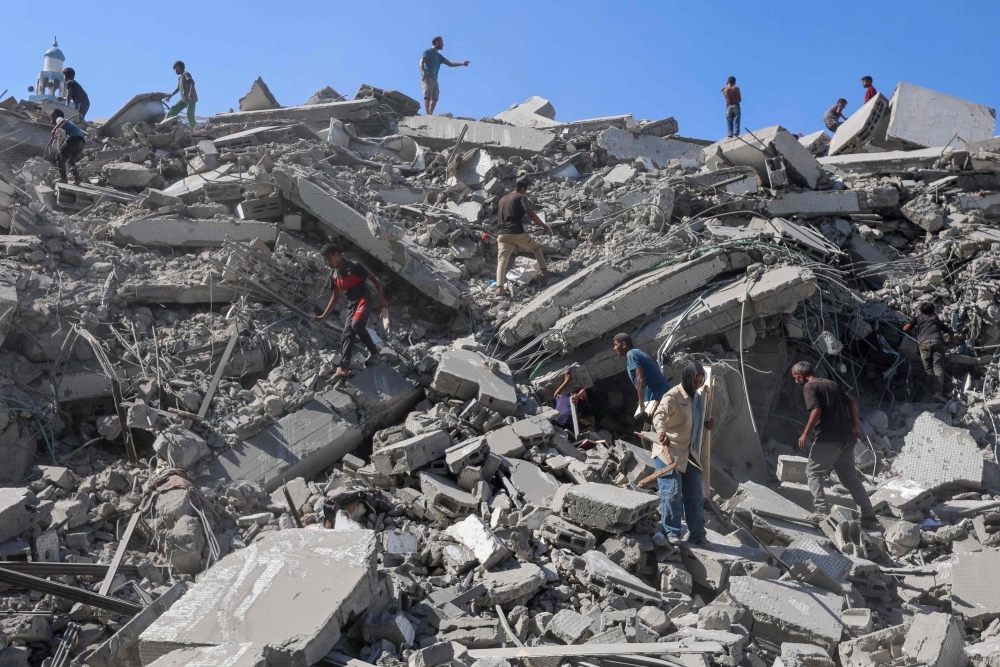

GURDASPUR, Sept 16 — The once-vibrant fields of Punjab now lie cloaked in brown wilted paddy, the air saturated with the sour stench of decay. The monsoon, once a symbol of life, has turned destructive this year—unleashing record-breaking rains that have shattered lives, drowned farmlands, and forced thousands into an uncertain future.
Punjab, the agricultural heart of India—often called the nation’s granary—has witnessed devastation of a scale that locals say they haven’t seen in decades. Floodwaters have swallowed land roughly equal to the size of London and New York City combined, leaving behind a disaster zone where food once grew.
“The crops have been destroyed and ruined,” India’s Agriculture Minister confirmed during a recent visit. Punjab’s Chief Minister echoed the grim reality, calling the catastrophe “one of the worst flood disasters in decades.”
For 70-year-old farmer Balkar Singh, the memories of 1988—the last time such devastation occurred—have returned with haunting force. Standing amidst a marsh where his paddy field once flourished, Singh watches the rising cracks creep along the walls of his home.
Across the state, more than 400,000 people have been impacted. At least 52 lives have been lost. According to India’s Meteorological Department, rainfall surged nearly 66% above average in August alone.
In response, Prime Minister Narendra Modi announced a ₹1,500 crore ($180 million) relief package, but for many, that relief feels far away.
In the village of Toor, nestled between the Ravi River and the Pakistan border, panic struck on the night of August 26. “The water rose up to 10 feet in minutes,” recounted Surjan Lal, a farm worker who spent nearly a week stranded on rooftops with neighbors as the flood carried away livestock, belongings, and hope.
In Lassia, the last Indian village before the international frontier, farmer Rakesh Kumar is counting losses, not harvest. After leasing extra land this year, he’s now facing a double blow—financial ruin and the likelihood that his land won’t be ready for winter wheat sowing. “Everything is buried under silt,” he said. “The machines can’t come in until the land dries, and even then, the bridge that connects us works only in lean months.”
For landless laborers like Mandeep Kaur, the devastation is even more personal. With the big landowners’ farms underwater, her source of daily income is gone. Her house was swept away in the flood, forcing her to sleep under a tarp in the open—exposed to snakes and the elements.
The impact is not just local—it’s national, even global. Punjab is India’s largest supplier of rice and wheat for the public distribution system feeding 800 million people. While domestic supplies may be safe due to existing buffer stocks, basmati rice exports—a premium product—are expected to take a hit.
“The main effect will be on basmati rice production, prices and exports,” said Avinash Kishore of the International Food Policy Research Institute. With US tariffs already squeezing basmati’s global competitiveness, the floods deepen the crisis for exporters and farmers alike.
Recovery will be an uphill battle. Punjab, ironically, had opted out of the federal crop insurance scheme, assuming it was low-risk due to strong irrigation. That decision now looms heavy, as countless farmers find themselves uninsured and unsupported.
“I don’t know what the future holds for us,” sighed Balkar Singh, his voice weary as the water still laps at his knees.