U.S. President Donald Trump has escalated pressure on Iran, saying the Islamic Republic has 10 days to agree to what he called a “meaningful deal” with the United States — or face consequences.
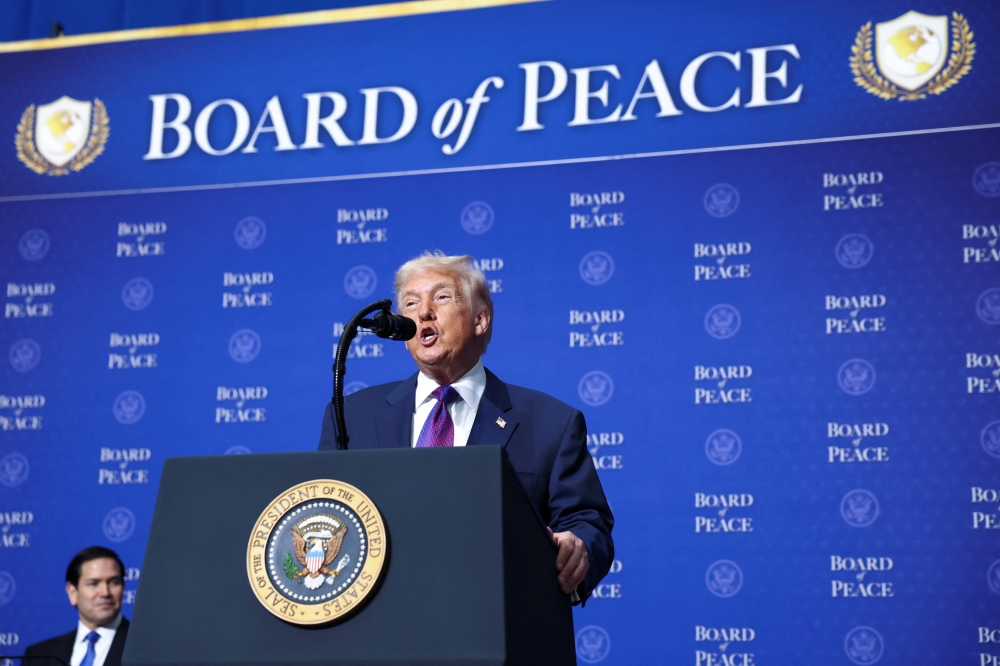
Speaking on Thursday at the first meeting of his newly launched “Board of Peace” initiative, which aims to stabilize conflict zones including Gaza, Trump stressed that reaching an agreement with Iran has been difficult in the past. “We have to make a meaningful deal, otherwise bad things happen,” he said, without detailing specific actions. He added that if negotiations fall apart, the U.S. “may have to take it a step further,” and hinted that developments will unfold during the coming 10 days.
Trump’s remarks came shortly after Israeli Prime Minister Benjamin Netanyahu issued his own stern warning, saying that any attack from Tehran would trigger a response greater than Iran could imagine — underscoring the rising tensions between the two countries.
The latest warnings follow a second round of talks, mediated by Oman in Geneva, where the U.S. pushed to prevent Iran from developing nuclear weapons — which Tehran denies seeking — while Iran sought sanctions relief.
White House Press Secretary Karoline Leavitt also weighed in, saying there are “many reasons and arguments that one could make for a strike against Iran,” and urged Tehran to accept a deal with Trump.
Trump has repeatedly threatened military action, initially over Iran’s handling of domestic protests and more recently over its nuclear program. On Thursday, Iran’s atomic energy chief reiterated that “no country can deprive Iran of the right” to enrich uranium — a core point of contention in negotiations.
Earlier diplomatic efforts faltered last year when Israel launched surprise strikes on Iran, sparking a 12‑day conflict that included U.S. involvement in bombing Iranian nuclear facilities.
Rising Fears, Global Reactions
Despite the heightened rhetoric, leaders on both sides claim they do not want war. Iranian President Masoud Pezeshkian said Tehran seeks peace but cannot back down on key demands. Meanwhile, Polish authorities have urged all Polish citizens in Iran to leave immediately. Germany has also scaled back military forces in neighboring Iraq in response to growing instability.
The Kremlin called for restraint, noting an “unprecedented escalation of tension,” but expressed hope that diplomatic channels could still lead to a peaceful outcome.
Military Buildup and Strategic Moves
In recent weeks, the U.S. has bolstered its military position near Iran, deploying warships, fighter jets, refueling aircraft, and other hardware. A second aircraft carrier is being sent to the region, joining the USS Abraham Lincoln and its air wing positioned roughly 700 kilometers from Iranian shores.
Iran responded with its own show of strength, with the Islamic Revolutionary Guard Corps conducting military exercises in the Strait of Hormuz — a strategic waterway that carries a significant portion of the world’s oil and gas shipments. Iranian officials have warned they could block the strait in retaliation to any military conflict, stoking fears of impacts on global energy markets.
The Strait of Hormuz remains a critical artery for global energy supplies — carrying about one‑quarter of the world’s seaborne oil and one‑fifth of all liquified natural gas.
As both sides brace for a possible turning point in negotiations, the world watches closely, hopeful that diplomacy prevails but wary that missteps could lead to far‑reaching consequences.