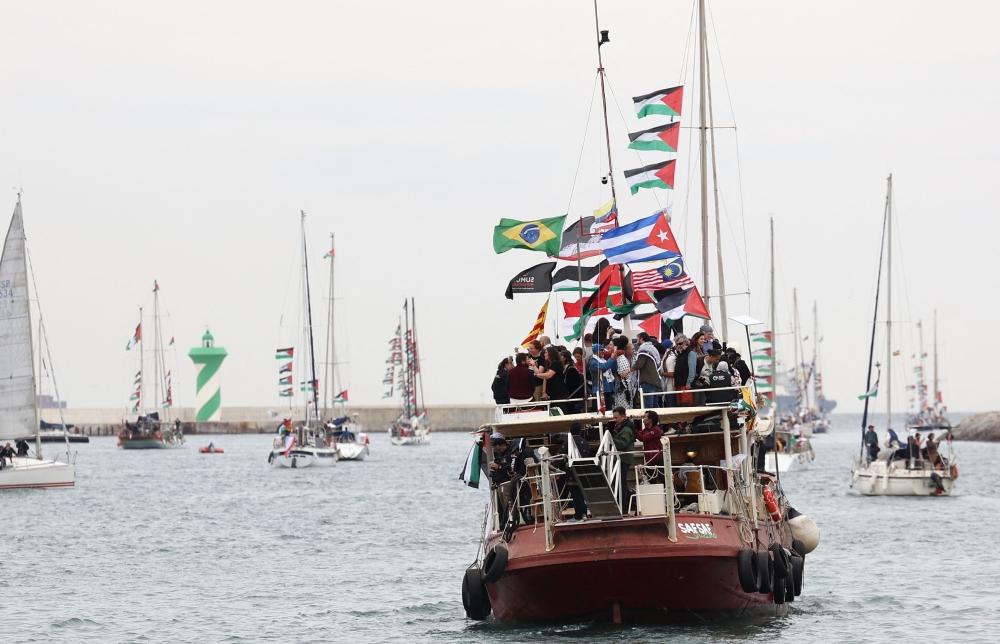
In a tense development at sea, Israeli forces have intercepted a large Gaza-bound aid flotilla in international waters near the Greek island of Crete, detaining approximately 175 activists, according to statements from both Israeli officials and organisers of the mission.
The flotilla, organised under the Global Sumud initiative, consisted of dozens of boats carrying pro-Palestinian activists attempting to challenge the long-standing blockade on Gaza. Israeli authorities confirmed that those detained were being transported to Israel, stating the situation was handled “peacefully.”
However, organisers painted a far more alarming picture. They reported that at least 22 vessels were boarded by Israeli forces during the operation, which they claim took place in violation of international law. According to their statement, military ships surrounded the flotilla during the early hours, cutting off communications and creating panic among those on board.
Eyewitness accounts from activists described a heavy military presence, with speedboats approaching and armed personnel allegedly pointing lasers and weapons at civilians. Participants were reportedly ordered to gather at the front of their boats and comply under pressure, while distress signals were issued as communication systems were disrupted.
The flotilla had departed from several European ports in recent weeks, including Marseille, Barcelona, and Syracuse, drawing global attention as part of a renewed effort to deliver aid and raise awareness about conditions in Gaza.
This is not the first such confrontation. A previous flotilla mission in 2025 also ended with Israeli interception, sparking international criticism and renewed debates about maritime law and humanitarian access. Among those detained during that earlier effort were high-profile activists, further amplifying global scrutiny.
The broader context remains deeply complex. Gaza has been under an Israeli blockade since 2007, with Israel maintaining strict control over entry points. Since the escalation of conflict in October 2023, humanitarian organisations and the United Nations have repeatedly warned of worsening shortages of essential supplies such as food, water, and medical aid.
While a fragile ceasefire was reached in late 2025, the humanitarian situation continues to be described as critical. Casualty figures on both sides remain a stark reminder of the conflict’s devastating impact on civilians.
At its core, this latest incident reflects more than a naval interception—it highlights the ongoing struggle over humanitarian access, political narratives, and the human cost of prolonged conflict. For the activists aboard those vessels, this mission was not just about delivering aid, but about being seen, heard, and remembered in a crisis that continues to unfold.