
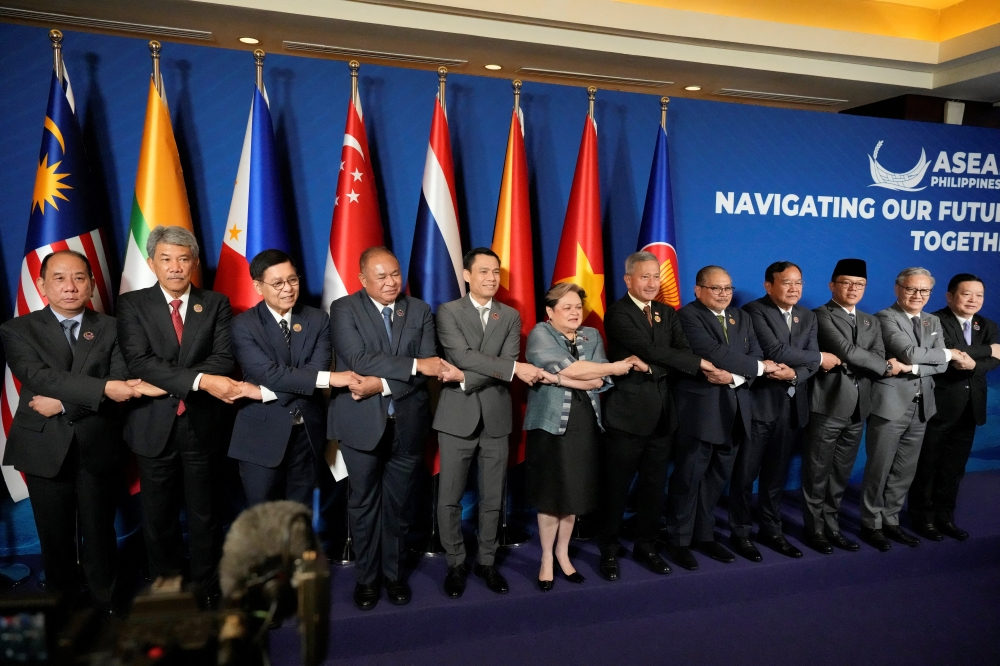
Leaders from Southeast Asia are gathering in the central Philippines this week for a crucial Asean summit as rising geopolitical tensions across West Asia, Myanmar and the South China Sea place enormous pressure on the region’s stability and economy.
Philippine President Ferdinand Marcos Jr. has described the summit as a “bare bones” meeting focused mainly on urgent economic concerns linked to the ongoing conflict in the Middle East. The gathering comes at a time when fears over disrupted oil supplies, higher food prices and weakened regional trade routes are increasing across Asia.
With Timor-Leste joining the regional bloc, Asean now stands as an 11-member alliance. However, despite expanding its membership, the organisation continues to face some of the most difficult political and security challenges in recent years.
Energy fears and supply chain concerns take center stage
One of the biggest concerns among Asean leaders is the impact of the escalating West Asia conflict on energy security and global trade.
President Marcos had earlier declared a national energy emergency after fears emerged over possible disruptions in fuel shipments and international supply chains. Leaders are expected to discuss how member states can cooperate to manage fuel shortages, rising inflation and food security issues affecting millions across the region.
The Strait of Hormuz, one of the world’s most important oil shipping routes, is expected to be a major point of discussion. Diplomats believe Asean could issue a collective statement calling for the reopening and protection of critical sea lanes to ensure uninterrupted global trade.
Although Asean has long promoted regional energy cooperation, experts point out that many of its agreements remain voluntary and lack strong enforcement mechanisms. The bloc’s Petroleum Security Agreement, created decades ago to support fuel-sharing during crises, has never officially been activated.
Myanmar crisis continues to divide Asean
The ongoing political crisis in Myanmar is also expected to dominate discussions.
Myanmar has remained largely isolated from top-level Asean meetings since the military coup in 2021 that removed the elected government and triggered a deadly civil conflict. Despite years of diplomatic efforts, the region has struggled to find a peaceful solution.
Recently, military leader Min Aung Hlaing was sworn in as president following controversial elections. His administration has promised to rebuild “normal relations” with Asean.
At the same time, the decision to transfer democracy leader Aung San Suu Kyi from prison to house arrest has sparked cautious optimism among some member states.
Thailand has reportedly pushed for a more “pragmatic” engagement with Myanmar’s leadership, while other countries remain hesitant to fully restore diplomatic recognition without visible democratic progress and peace efforts.
The Philippines has welcomed the move involving Suu Kyi while also urging Myanmar authorities to allow special envoys access to her.
South China Sea tensions remain unresolved
Maritime security and territorial disputes in the South China Sea are expected to remain another key issue during the summit.
Several Asean countries including the Philippines, Vietnam, Malaysia and Brunei continue to challenge China’s sweeping claims over the strategic waterway. The area remains one of the world’s most contested maritime zones due to its importance for international trade and natural resources.
For more than two decades, Asean and China have negotiated a proposed Code of Conduct aimed at preventing conflicts and regulating activities in the disputed waters. However, talks have repeatedly stalled because of disagreements over enforcement powers, legal authority and territorial boundaries.
The Philippines, which has experienced several tense confrontations between its vessels and Chinese ships in recent years, had hoped to finalise negotiations during its Asean chairmanship. Yet analysts believe any future agreement may remain largely symbolic rather than legally enforceable.
Diplomatic insiders suggest Beijing is unlikely to support any binding arrangement and instead prefers a broader political declaration with limited enforcement.
A summit shaped by uncertainty
This year’s Asean summit arrives at a defining moment for Southeast Asia. From energy insecurity and regional wars to political instability and maritime disputes, the bloc faces mounting pressure to prove its relevance and unity in an increasingly divided world.
While leaders continue to promote cooperation and dialogue, critics argue that Asean’s biggest weakness remains its slow decision-making and lack of enforceable collective action.
For millions across the region, the outcome of these discussions could directly affect economic stability, energy prices, food security and regional peace in the months ahead.